
- You are here:
- Home »
- Airbrush Cleaning »
- Cleaning Your Airbrush

Cleaning Your Airbrush
The most important bit of maintenance you will ever do is cleaning your airbrush. You’ll do it so often that you’ll stop thinking about it. Whenever you encounter spray problems step through these methods in order.
Remember this phrase, chant it to yourself and follow it’s instruction and you will avoid most airbrush problems all together.
“Clean it while it’s wet and I won’t have to clean it when it’s dry.”
Airbrush Cleaning Kit
For this, I highly recommend Iwata Media’s airbrush cleaning station and Iwata’s airbrush cleaner. With this pot, you don’t have to run to nearby bathroom to flush your airbrush. Instead, you just spray into the jar, which has a filter on top to catch fumes. This station also serve as an airbrush holder.
Removing Tip Dry
When dry paint builds up on the long tapered needle it will eventually do one of two things.
- Fly off like a big load of airbrush spit toward your work
- Seal up the airbrush’s business end and refuse to spray.
Here are two different ways to get rid of nasty, icky, yucky, tip-dry.
- The Factory Approved, Certifiable, Technician’s Over-the-Phone Technical Support Method.
- The Quick, the Easy, the Dangerous Method.
The Color Change Rinse
When you change colors it’s usually time to clean your airbrush. This prevents colors from mixing together and getting muddy. It will also wash away the build up that can give you fits later on.
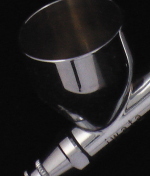
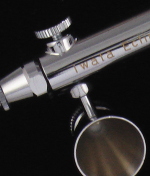
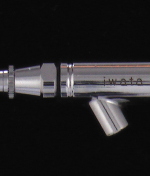
Simply choose which picture looks most like your airbrush.
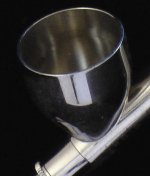
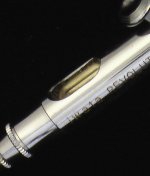
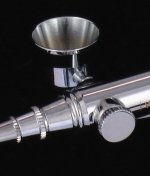

- Color Change Rinse for Gavity Feed Airbrushes
- Color Change Rinse for Side Feed Airbrushes
- Color Change Rinse for Siphon Feed Airbrushes
- Color Change Rinse for Iwata Gx Airbrushes
The End of Session Rinse
When you’re done spraying, when you’re going to leave the airbrush sitting around for awhile. Perhaps it’s time to eat lunch, or take a break, or you’re done for the day–it’s time to follow this cleaning guide.
Simply choose which picture looks most like your airbrush.
- End of Session Rinse for Gravity Feed Airbrushes
- End of Session Rinse for Side Feed Airbrushes
- End of Session Rinse for Siphon Feed Airbrushes
- End of Session Rinse for Iwata Gx Airbrushes
Deep Cleaning
If you’re religious and pious about Color Changes, and End of Session Rinses you shouldn’t have to do this very often, if ever. But cleaning your airbrush with this method solves 90% of all airbrush problems. That’s not an exaggeration, it’s actually a low estimate.
Choosing which specific set of instructions gets a little tricky here.
Deep Cleaning Airbrushes With Screw in Nozzles (All Iwata Airbrushes Except Eclipses)
If your airbrush has 2 caps like the picture shows

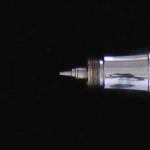
…then choose from these options below.
Deep Cleaning Airbrushes With Self Centering Nozzles (Iwata Eclipse)
If your airbrush has 3 caps like the picture shows

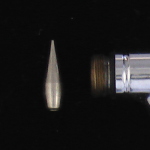
…then choose from these options below.
The Guru’s Advice
- Do NOT soak the airbrush!Though it will clean your airbrush it also causes extra problems.
- Clean the airbrush now.Dry paint is an airbrush’s enemy and extra time to dry is paint’s friend. So don’t wait, clean your airbrush as soon as you’re done, or you’ll get to clean it when you have problems.
 Do NOT use any cleaning solution with ammonia in it.Ammonia is a great cleaning solvent for water based paints, however, ammonia doesn’t like brass or chrome. This means an icky green substance will build up inside your airbrush (brass core) and the exterior chrome plating will peel off.
- If you’re in front of people clean the outside of your airbrushes too.Magic is all about impressions. When you work magic in front of people don’t give them opportunity to focus on something as dumb as dirty equipment.
Accessory Cleaning Methods
Accessories are exciting to me. They solve specific problems while you’re cleaning your airbrush.
- Using a Cut-Away Handle
A cut-away handle is a great feature that lets you spray more cleaning solution through the airbrush quicker during a color change or end of session rinse.Note: The opening is not there for you to “adjust the needle”. No, no, no! You’re only allowed to think of “adjusting the needle” and cut-away handles while telling someone else not to do it!

- Using a Double Cut-Away Handle
Double Cut-Away Handles are fabulous! They let you spray more through the airbrush during a color change rinse, and you can quickly remove the needle for an end of session rinse.